Friday, January 28, 2011
Photoshop

Another Photoshop Tutorial


Wednesday, January 26, 2011
Practice Macro
 Before I did my actual shoot, (previous post) we had a practice macro shoot with shells, to the right is my contact sheet. I didn't edit any final photos.
Macro Shoot


Black and White
 So, after following this simple tutorial, and by using only a few simple tools and techniques i learned how to add color to black and white photo's using adobe photoshop. The picture stated like this (top left), and after i completed all the steps, it ended like that (bottom left). Blue is my favorite color, and although very subtle i really like this picture.
Monday, January 3, 2011
Macro Photography
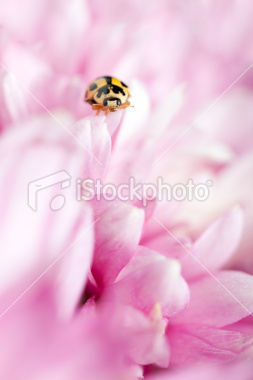
My class was assigned to find our definition of Macro Photography through research. Well after reading some things and analyzing a few photos (below) i have come up with what i think is Macro Photography.
- Macro Photography-basically, this is the art of taking close-up photos. For it to be considered macro photography the photo is in focus, zoomed up entirely getting extreme detail. (Source)
- Below the post, i have different examples of Macro Photography posted.
- Tools- To take such photos, a specific lens is, sometimes, necessary.
- I researched tools that photographers used, and i came across this site, Edberg Photo. I learned that there are many different lenses, as well as other types of tools that you can use to get such detailed photos.
- A few tools that i will list are the- Macro lens, close-up filters, reversing lens, and stacking lenses.
- At the bottom of this site, the one posted, there is a great example of how each of the tools work. It amazed me at the difference between them all and how well they actually work
- When asked what i would photograph, when doing a macro photography assignment, i immediately thought of a flower, fake or real.
- 3 subjects i'd want to photograph:
- Flower
- My bass guitar
- A lock
- Each of these subjects would create unique photos, and if i were assigned this i would photograph each. (except i wouldn't bring my bass to school! If it was in-class i would photograph a textbook instead.)




Thursday, December 16, 2010
Robert Capa
 |
| Source |

Ernest Andrei Friedmann, or Robert Capa, was born in Budapest on October 22, 1913. Little did he know, at the time, that he would be the most famous war photographer of the 20th century.
Like most photographers, he started his career with small projects, but always found himself in the middle of a war. At the age of 18, Capa left his home and found work in Berlin.
From 1936-1939 Capa was in Spain photographing the tragedies of the Spanish Civil War. After, he traveled to China to capture the Japanese Invasion.
 |
| Source |

 |
| Source |

 |
| Source |
(These are the sites where I got my information on Robert Capa)
Subscribe to:
Posts (Atom)